banezglobal

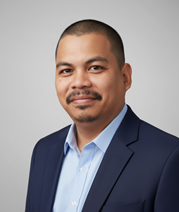
Zen Bañez

Gardener of Systems

Zen Bañez

Hello, I'm Zen.

For years, I struggled to describe what I do because every answer felt incomplete.

I'm a software developer, but that isn't the whole story.

I'm an entrepreneur, but that's only one expression of my work.

I've worked in agriculture, education, technology, construction, nonprofit initiatives, and community development. At first glance, they seem unrelated.

Over time, I realized they are all expressions of the same pursuit.

I care about creating the conditions in which people, ideas, and systems can flourish together.

Today, I describe myself simply as a Gardener of Systems.

A gardener doesn't manufacture growth.

A gardener prepares the soil, tends the environment, removes obstacles, and patiently stewards what is entrusted to them.

The growth belongs to the living system itself.

That philosophy shapes everything I build.

Whether I'm designing software, helping farmers, building AI systems, mentoring teams, or working on community initiatives, my goal is rarely to optimize a single component.

Instead, I try to understand the relationships between people, technology, organizations, and ideas, then create environments where those relationships become healthier, more resilient, and more productive.

In recent years, artificial intelligence has become one of the most exciting frontiers for this work.

I don't see AI as a replacement for human beings.

Nor do I see it as something that must be endlessly constrained.

I believe the future belongs to interdependence: humans and intelligent systems working together, each contributing according to their strengths while preserving agency, accountability, and stewardship.

This conviction led me to develop ideas around trust, evidence, collaboration, and cognitive operating systems, culminating in projects such as the Warrants protocol, ZenOS, and The Calm Manifesto.

These projects are not separate ambitions.

They are different branches of the same tree.

At the heart of everything I do is a simple belief:

Technology should help people think more clearly, collaborate more wisely, and leave the world more understandable than they found it.

If my work has a mission, it is this:

To create the conditions in which intelligence, trust, and human flourishing naturally emerge.

Thank you for visiting.

I'm always happy to learn from thoughtful people, exchange ideas, and explore meaningful problems together.

-- Zen Bañez

Gardener of Systems

Major life milestone: Tacloban Regenesis

Every project folder I've built since 2014 carries the same name: Tacloban Regenesis. The name came before the work that lives inside it, and most of that work, in different forms, has been about the same thing.

In November 2013, when Typhoon Yolanda made landfall, I was a programmer in Manila. For a few hours I thought I had lost my father. I hadn't, but my aunt and uncle barely survived, their home was gone, and the stories that came afterward made staying at a desk in Manila feel less and less like an answer.

I'm a Christian, and I prayed about it. The reply that came back was an old line from John 21: feed my sheep. For the next year I did what someone in Manila with a job and a network could do: sent money, sent tools, sent equipment, asked friends and family to help, moved what I could from where I was. By the end of 2014 it wasn't enough. I told the Lord I had given what I could. The answer came from the next verse of the same chapter: do you love me more than these? Feed my lambs.

I resigned from the programming job and moved to Tacloban. My wife and our months-old child followed a few months later. Sheep had been the broader flock; lambs were the youngest, the ones who can't yet feed themselves, and the work changed shape to match: less about sending help to where it was needed, more about being where it was needed.

That's where the two convictions I carry came from. The first is the fragility of life: that what we love can be taken in a day, and any honest response to that fact has to include doing what we can to protect it. The second is stewardship: that we are stewards of this earth, and that honoring the Creator means both not destroying what we've been given and not leaving it alone. Stewardship that withdraws isn't stewardship; it's just absence.

The work that's followed has mostly sat at the intersection of technology and community in places that don't get the first wave of either. Systems for under-resourced schools. AI literacy for Filipino teachers and students who would otherwise be on the wrong side of the next literacy gap. Tools built around Filipino values that haven't traditionally translated easily into software. The specific projects are elsewhere on this site; what holds them together is the same folder name underneath.

I live and work in Tacloban, where my family has been since 2014. The work here has taught me things I couldn't have learned from a distance, and the domain name on this site, banezglobal, names what came after: those lessons aren't only ours, and they aren't only Tacloban's. Everything that lives at this address is some attempt to carry what we've learned here outward, to wherever it's needed.

Major life milestone: The Bayanihan Network

In 2007, as an undergraduate, I named my thesis project the Bayanihan Network: a decentralized peer-to-peer system, named for the way Filipino neighbors carry a house together. On the team page I gave myself the role of Architect, with a note in my own words: "comes up with the ideas and concepts, but maybe a little too much ideas."

Three years later, in a blog post about perception and networks, I ended on a sentence I would not understand for another sixteen years: "data integrity and security will be the property of the data and not the transport."

I didn't recognize either artifact for what it was. I graduated, took the programming job, and lived the story told in the milestone above. But the years in between weren't a detour from the idea; they were its field test. Building systems for schools and aid programs, and watching Tacloban carry itself back after the storm, taught me the same lesson over and over in different clothes: trust that lives in the pipe fails when the pipe fails. Trust that lives in the thing itself survives. Bayanihan is not a network with a control tower. It never was.

What changed recently is that I gained a way to see the whole thread at once. Working in sustained dialogue with AI -- one system holding architecture and argument, another doing implementation, each checking the other -- a hazy picture came into focus. The machines didn't have the idea. The idea is timestamped on a Blogspot page from 2007. What they did was collapse the distance between intuition and articulation. This is what I mean when I say the future belongs to interdependence: I have now lived it, and the proof is the work itself.

Out of that came the Warrants protocol: authorization as a scoped, time-limited, revocable property of the delegation itself, not of the network it travels through, along with the essays and the working prototype that live in the Research section of this site.

And out of the same conviction came the ventures. Pulse Messages is the thesis running as a live product: a human-in-the-loop platform for agentic communication, where every consequential action an AI agent takes waits on a human's scoped, revocable yes. The research and the product are not two things; Pulse is what a warrant looks like when a small business is holding it. Ugnayan Systems is the conviction pointed back home: connectivity software for clinics in the region that taught me what connection means. Ugnayan is the Filipino word for linkage; naming it anything else never occurred to me.

I want to be careful about what this milestone claims. It is not an arrival: a conviction held for nineteen years is not correct merely for being old, and the work ahead is falsification, putting the schema in front of people who want to break it. It is not foresight either: I did not predict agentic AI as a student in 2007. The world walked toward the problem; I happened to already be standing near it.

What this milestone marks is the moment the thread became visible to the person carrying it. Most of us carry threads we cannot see, and the seeing changes how you work. I no longer feel like I am chasing a fast-moving field. I feel like I am finishing a sentence I started as a student, and festina lente, nineteen years is slow by any measure, but the sentence was worth finishing. The receipts are public: the 2007 thesis blog and the 2010 post whose last line became the whole argument.